📡 Recording the TS traffic input & output
The easiest way to record is to install Wireshark on the computer with FAB DVB Interface.
🖱️ Record using Wireshark GUI Application
Sometimes it is necessary to check the IP transport stream (TS). In such case please save the incoming and outgoing transport stream and send it to FAB for further analysis.
The incoming and outgoing transport IP stream can be recorded with Wireshark following these steps:
- In this example FAB DVB Interface is receiving TS on
225.1.1.1:5001and it is transmitting TS on225.1.1.11:5011 - Make certain that FAB DVB Interface Service is running
- Start Wireshark
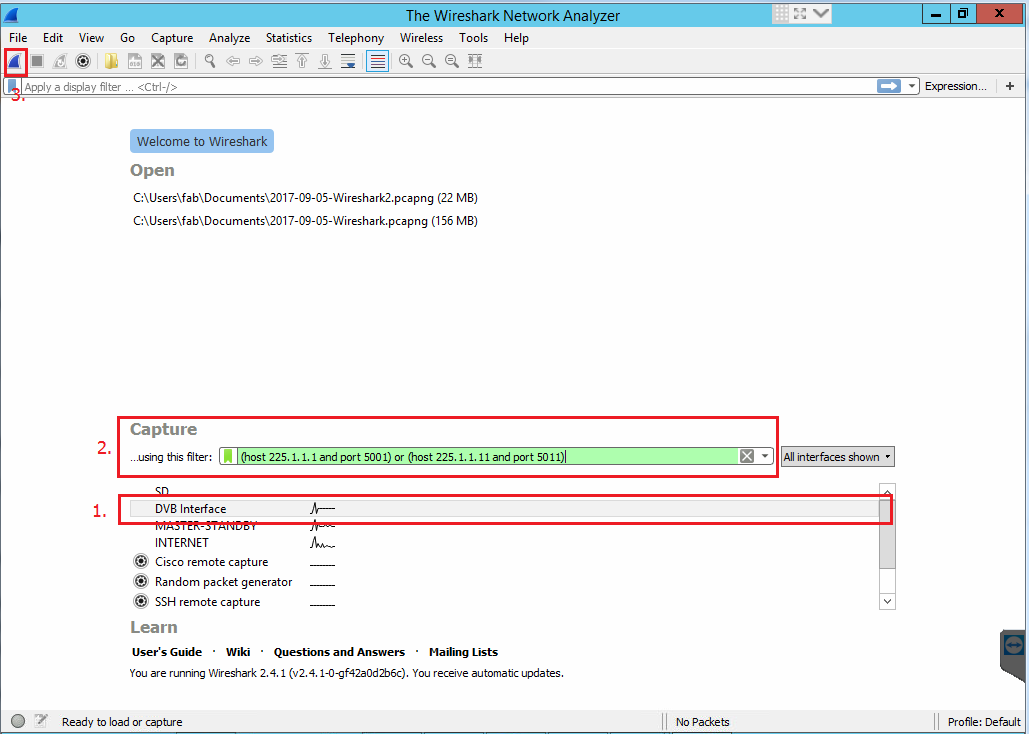
- Select the network interface on which you wish to record the IP transport stream (1.)
- Select the filters (2.)
- Click on the icon to start recording (3.) as seen in the picture below:
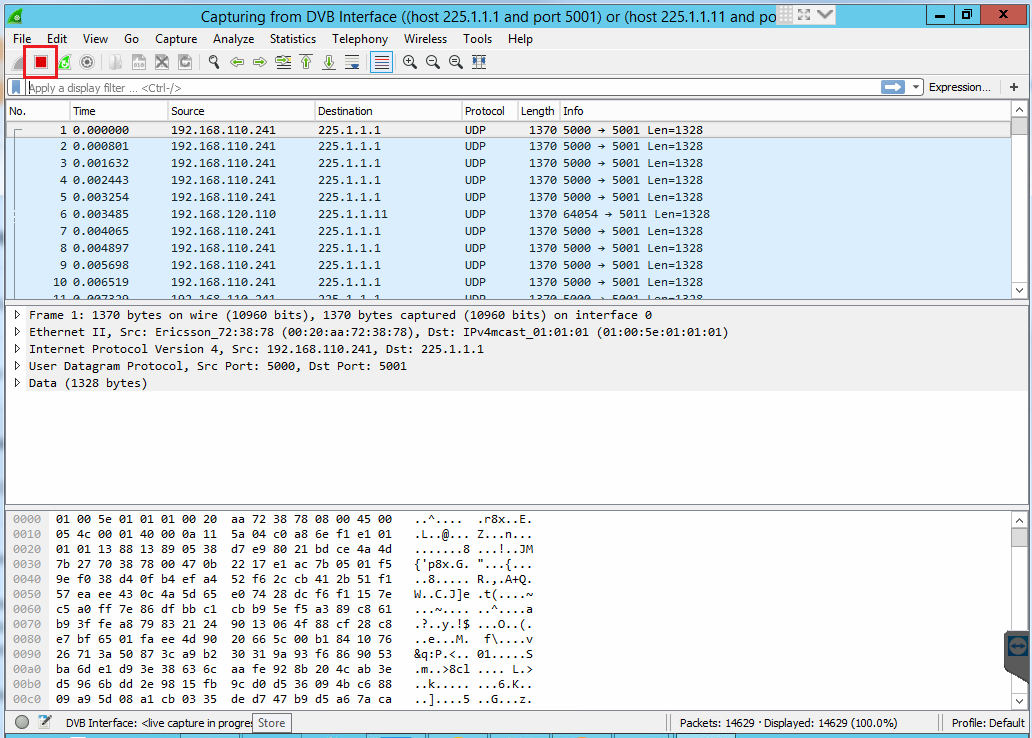
- Stop the recording after a minute as seen in the picture below:
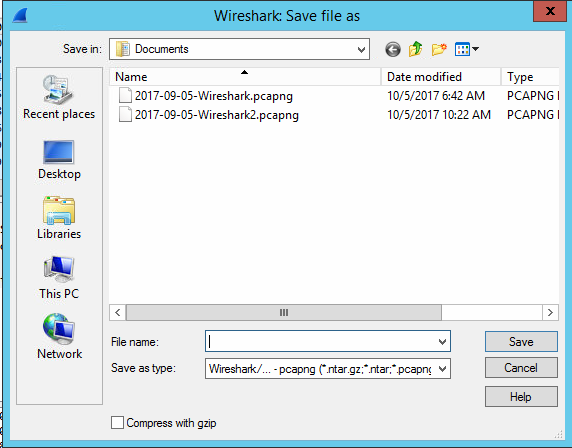
- Save the recorded IP transport by clicking on “File->Save or Save As…” as seen in the picture below:
If necessary send the recorded IP transport stream file(s) together with the system report to FAB 📧. Instructions on how to create a system report can be found here: Creation of FAB System Report
💻 Record using command line
- List ethernet interface to see which one should be used for recording
"C:\Program Files\Wireshark\tshark.exe" -D
- Record all traffic for a duration of 30 seconds
"C:\Program Files\Wireshark\tshark.exe" -i 2 -a duration:30 -w c:\0\main.pcapng
Where -i 2 is interface number 2.
- Record all UDP traffic coming from
231.29.34.9:5004for 30 seconds
"C:\Program Files\Wireshark\tshark.exe" -i 2 -a duration:30 -f "udp and dst host 231.29.34.9 and dst port 5004" -w c:\0\main.pcapng
Where -i 2 is interface number 2.
- Record all UDP traffic coming from
[email protected]:5004for 30 seconds
"C:\Program Files\Wireshark\tshark.exe" -i 2 -a duration:30 -f "udp and src host 10.29.34.127 and dst host 231.29.34.9 and dst port 5004" -w c:\0\main.pcapng
Where -i 2 is interface number 2.
Note that only traffic will be recorded that is already present on the ethernet interface. Wireshark will not request UDP multicast using IGMP from the ethernet switch.
🔬 Analyzing the pcapng file
You will require Wireshark and TSDuck programs.
- List streams contained in the file
"C:\Program Files\TSDuck\bin\tspcap" --list-streams "c:\0\main.pcapng"
The output will be similar to this:
Source Destination Protocol Packets Data bytes Bitrate
10.29.34.127:5004 231.29.34.1:5004 UDP 38,225 50,304,100 40,001,070
10.29.34.127:5004 231.29.34.9:5004 UDP 38,224 50,302,784 40,000,023
10.29.34.127:5004 231.29.34.12:5004 UDP 38,224 50,302,784 40,000,023
10.29.34.127:5004 231.29.34.13:5004 UDP 38,225 50,304,100 40,001,070
10.29.34.127:5004 231.29.34.15:5004 UDP 38,225 50,304,100 40,001,070
- Convert a stream to a TS file
"C:\Program Files\Wireshark\tshark" -r "c:\0\main.pcapng" -Y "ip.src == 10.29.34.127 && ip.dst == 231.29.34.1 && udp.srcport == 5004 && udp.dstport == 5004" -T fields -e udp.payload | xxd -r -p > C:\0\main.ts
- To analyze the TS file TSDuck offers a number of analysis including display of contained PIDs, bitrate and more.